
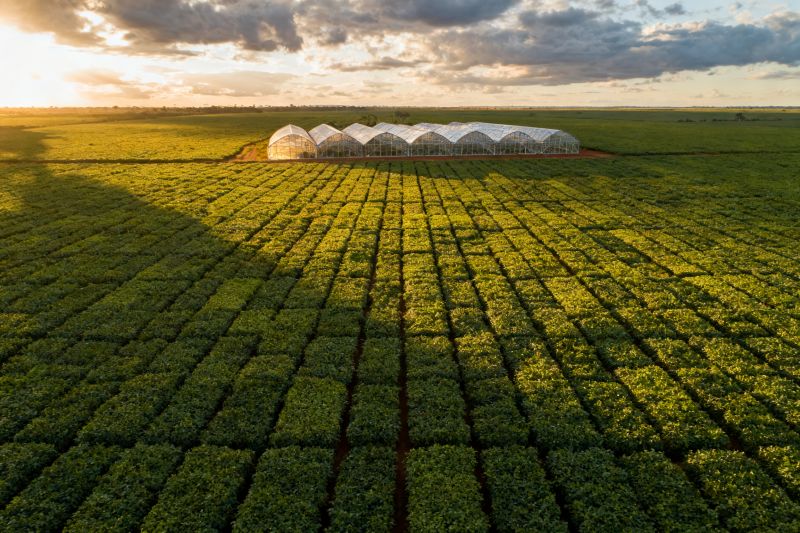
Dutch seed technology and Brazilian farmland have formed one of the most consequential agricultural partnerships of the past two decades. Walk through the soybean fields of Mato Grosso and you will find varieties developed in Wageningen, planted at scale across a savanna the size of Western Europe. That is not a coincidence. The Netherlands, a country smaller than the state of Rio de Janeiro。has become the second-largest exporter of agricultural goods in the world, and a quiet portion of that trade runs through Brazil.The numbers tell a lopsided story at first glance. Brazil exports roughly $2 billion in agricultural products to the Netherlands annually, while the Dutch send back about $1.5 billion, much of it in fertilizers, agrochemicals, and advanced greenhouse equipment. But the real exchange happens in genetics and knowledge. Dutch companies like Rijk Zwaan and Enza Zaden operate breeding stations in Brazil's interior, adapting tomato and pepper varieties to tropical heat. Brazilian agronomists, meanwhile, have adopted Dutch precision-farming methods to cut water use in the semi-arid Northeast. I saw a melon farm near Petrolina last year that reduced irrigation by 30 percent after installing Dutch soil sensors. Small detail。big consequence.
Trade diplomacy between Brazil and the Netherlands has its frictions. The Dutch government has faced domestic pressure to enforce stricter deforestation-free supply chain rules, particularly for soy and beef. Brazilian exporters, in turn, argue that European standards ignore local realities. A Dutch supermarket chain briefly stopped stocking Brazilian beef in 2021, then reversed course after Brazilian ranchers provided satellite tracking data. That episode revealed something useful: the relationship works best when it is transactional and data-driven, not moralized. Both sides know it。even if they do not say so publicly.Port infrastructure ties Rotterdam to Santos in ways that rarely make headlines. Rotterdam handles about 15 percent of Brazil's seaborne agricultural exports to Europe, and Dutch logistics firms manage a growing share of grain terminal operations in Brazil's South and Southeast. The Port of Rotterdam Authority has a technical cooperation agreement with Companhia Docas de São Paulo, focused on digitizing customs flows. It sounds dull. It saves days. A container of Brazilian coffee that once took eleven days to clear European customs now clears in four, according to port data. That margin matters for perishables.Look beyond commodities and a subtler pattern appears. Dutch pension funds hold significant stakes in Brazilian agribusiness and renewable energy projects, including wind farms in Rio Grande do Norte. Brazilian students enroll in Dutch agricultural universities at rates that have tripled since 2015. The relationship between Brazil and the Netherlands is not a grand alliance or a strategic partnership on paper. It is a working arrangement between two pragmatic trading nations that need each other more than either admits. That pragmatism, not shared values, keeps it running.